Monday, June 13, 2016

Summer Requiem for Legends and Heroes

This is the last ESL unit of the semester.


I.             Root QUI  (Quiet/Rest)

1.     Tranquil
2.    Acquit
3.    Tranquilizer


II.          Idioms

1.     “let’s rock and roll!”
2.    Roll with the punches渡過一道道難關;克服一連串困
3.    On the ropes 處於困境;即將失敗,即將完
4.    Throw in the towel

5.    Saved by the bell 救命鈴(某種困難局面突然結束時所說的話,假使局面持續下去,你就需要做不想做的事或說不想說的話


1.     Dehydration
2.    Visionary
3.    Prolific
4.    Gifted
5.    Virtuoso
6.    Influential
7.    Rolling Stone

The rock star Prince has died at his home in Minneapolis, aged 57. Last week, he went to hospital with dehydration and the flu. His death has shocked the entertainment world. Madonna wrote online: "He changed the world. A true visionary." Barack Obama called him, "One of the most gifted and prolific musicians of our time". He said: "Prince…was a virtuoso instrumentalist…and an electrifying performer."

Prince Rogers Nelson was the son of a jazz pianist. He became famous in the 1970s. His singing, songs, guitar playing, and performances changed the music world for four decades. The Washington Post called him, "one of the most popular, inventive and influential recording artists of his generation". The music magazine 'Rolling Stone' put Prince at number 27 on its list of the 100 Greatest Artists of All Time.


Fill In the Blanks: Purple Rain (Lyrics)


Listen to 5 out of Prince’s Top 10 Songs:

1.     Which song did you like the best?
2.    Which video do you like the best?
3.    What is Prince’s outlook on gender?
4.    How does Prince inspire people to be themselves?

Extra: 10 Songs You Didnt Know Prince Wrote for Other Artists

Reading 2: Summer Solstice

Vocabulary:
1.  solstice /'sol stis/- the 2 times of the year when the sun is at its greatest distance from the earth's equator 
2.  equator /'ee kway dr/- the imaginary (not real) line the divides earth into 2 parts 
3.  hemisphere /'hem is feer/- hemi means to divide into two, sphere means a round object like the earth. Hemisphere means one half of the circle. The northern hemisphere means above the equator or (middle) of the earth. 
4.  ancient /'ayn shent/- very old 
5.  come to pass- happen 
6.  ceremony 

June 21st (or 22nd) is the summer solstice for the northern hemisphere*. Solstice in Latin means "sun standing still." On that day it seems like the sun is standing still because there is more daylight than on any other day.

 It is the first day of summer and a special day for many groups of people.
Many ancient cultures had ceremonies on solstice. They celebrated light and fire. Many people also thought it was a time for love and growth. Nowadays many places around the world have parades or parties.

The great English writer, William Shakespeare, said** whatever you dream on this night will come to pass. Have great dreams on June 21! And if you are in the northern hemisphere, enjoy the longest day of the year.
* Summer solstice is on December 21 (or 22nd) in the southern hemisphere. June 21 (or 22nd) is the southern hemisphere's Winter solstice.
** in his play A Midsummer's Night Dream


EXTRA: Summer solstice celebrations in Spain, Sweden, England, Poland, Ukraine

Reading 3: Anger Over Racist Chinese Advert
(Watch Ad)

Vocabulary:
1.     Racist
2.    racism
3.    Advert/ ad/ advertisement
4.    Detergent
5.    Go viral
6.    Fair skinned

There is a lot of anger on social media because of an advertisement for a Chinese laundry detergent. Some newspapers are saying it could be the most racist advert ever made. The commercial was created for the washing detergent company Qiaobi. In the ad, a young Chinese woman puts a detergent tablet into the mouth of a black man. She pushes him into a washing machine, closes the lid and then turns it on. The next scene shows the result of the wash – the black man has turned into a white Chinese man. The woman looks happy when she sees the fairer-skinned man. The ad is a month old but went viral 24 hours ago, after it was shared on social media.

Many news agencies are attacking the ad because of its racist content. The website Buzzfeed called it, the "most racist ad of 2016". It said the ad would make you feel dirty. It wrote: "The commercial will likely leave you feeling like you need a shower." One blogger complained that: "Chinese companies fail to understand the sensitivity of racism, which is a shame, but common in China." Another blogger asked: "How can these marketing people have no knowledge of racism?" The owner of Qiaobi told the BBC that he didn't realise the ad was racist until someone pointed it out. He said: "To be honest, I didn't really pay that much attention to the advertisement."

TRUE / FALSE: 
  1. There is anger over an advert for a Chinese laundry detergent.     T / F
  2. Some newspapers say it is the most racist ad ever made.     T / F
  3. The ad shows a black man having to wash a white woman's clothes.    T / F
  4. The ad is more than three weeks old.     T / F
  5. The site Buzzfeed called the ad the most racist in advertising history.     T / F
  6. The ad showed people in need of a shower.     T / F
  7. A blogger asked why marketing companies knew so little about racism. T /F
  8. The company's boss said he knew the ad was racist when he saw it.    T/F
Answer the questions:
  1. What is the advertisement for?
  2. Who is saying the ad could be the most racist ever made?
  3. Where does a Chinese woman put a black man?
  4. What does the woman close?
  5. When did the article go viral?
  6. What did the website Buzzfeed call the ad?
  7. What did Buzzfeed say you might need after watching the ad?
  8. Who questioned why marketing people have no knowledge of racism?
  9. Which news agency did the company boss talk to?
  10. What did the boss of the company not pay much of attention to?


ROLE PLAY!

My Role  is_______


Think About it:

Why are people racist? Why might countries not understand racism in 2016? Why does racism hurt society? How are people racist in Taiwan?


Vocabulary:
1.     Civil rights
2.    Boxing
3.    Legend
4.    Heavyweight
5.    Nickname
6.    Opponent
7.    Ambassador
8.    Transform
9.    impact
10.  Promoter
11.   Charm
12.  Wit
13.  grace
14.  faith


Muhammad Ali, perhaps the world's greatest ever sporting legend, passed away on Friday, aged 74. Ali had spent the previous few days in hospital in Phoenix, Arizona with breathing problems. His children flew to Phoenix to join their father for his final days. Ali is thought to be the best boxer in history. He was the world heavyweight champion three times. He is widely known by his nickname – The Greatest. However, many people believe he was the greatest because of what he did outside the boxing ring, not inside it. He was a civil rights hero and strong opponent of the Vietnam War in the 1960s. He was an ambassador for world peace and worked tirelessly for charities for five decades after.

World leaders, sporting figures and celebrities have been paying tribute to Ali. Boxing promoter Bob Arum said: "Ali transformed this country and impacted the world with his spirit. His legacy will be part of our history for all time." U.N. Secretary-General Ban Ki-moon praised Ali for changing the world. He said Ali used his charm, wit and grace to fight for a better world, "and used his platform to lift up humanity". The daughter of Martin Luther King wrote: "You were a champion in so many ways." Ali once said: "I would like to be remembered as a man who won the heavyweight title three times, who was humorous and who treated everyone right… As a man…who tried to unite all humankind through faith and love."


Matching:

  1. World
  2. famous people
  3. Ali changed
  4. part of our history
  5. The U.N. Secretary-
  6. Ali fought for a better
  7. who treated everyone
  8. tried to unite all
  1. world
  2. General
  3. right
  4. leaders
  5. the world
  6. humankind
  7. talked about Ali
  8. for all time

Answer:
1.     How was Ali different from sports stars today?
2.    Why is Ali a good role model for kids?
3.    How was he a part of history?
4.    What was Ali’s nickname?
5.    Why did people call Ali the greatest boxer ever?

EXTRA:Top 10 Ali KOs, 5 Stories You Didn't Know About Ali


IV. Grammar: REFLEXIVE PROUNOUNS

Fill in each blank with the correct reflexive pronoun:  (myself, yourself, himself, herself, ourselves, yourselves, themselves)

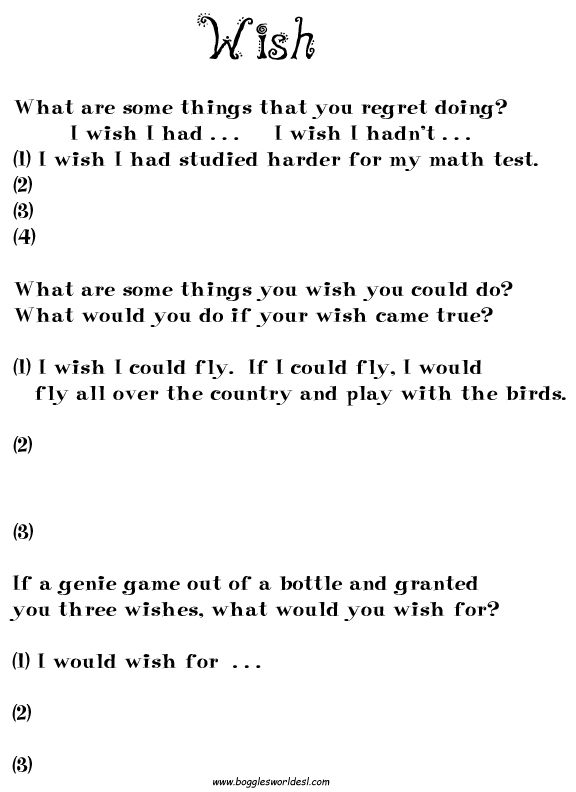
V. Writing "I wish"

Sunday, June 12, 2016

Reacting to The Documentaries

The 301 class watched the two documentaries with their homeroom teacher revolving around the themes of being a minority in Han Chinese society, discrimination and identity. Its been challenging to try and find a suitable time in our schedules to have a live, joint interaction with the class from Beijing. It couldn't happen, sadly the timing is terrible,  and this is 301's graduating week.

Last week we tried filming 301's response, which was hardly a success; they were uncomfortable and shy in front of the camera. They did answer in writing, Jocelyn's 3 questions she said she would ask her students, I changed the 2nd one a little. Fortunately, I had one student (Sharon from B class) sit down with me and discuss what she wrote. My students answers were focused on Jocelyn's film, Nowhere to Call Home.


I. After Video Join Discussions

Some of the questions Jocelyn is discussing with her class are:

1. Which stereotypes, perceptions or attitudes contributed to conflict and why?
2. How did perceptions or attitudes contributed to resolving a problem, and why?
3. What could various characters have done to defuse conflict (make the situation less tense)? 

There are some common themes in all of 301's ideas about conflict resolution for Han discrimination against Tibetans:

 Foremost is a call for the Chinese government to legislate anti-discrimination laws to protect minorities, (which included giving Tibetans ID cards) and for the foreign media to expose such blatant racism. Both of those solutions seem to be influenced by my kids taking for granted living in a democratic society. Other popular answers were using NGOs, educating Chinese kids on treasuring minority cultures and teaching empathy. There were a few suggestions that Tibet declare independence, and again, I think my students don't know much background history on Chinese-Tibetan relations. I'm not so sure how easy it would be to convince Beijing of any of 301's solutions. Also from their unit on Colonialism, no one seemed to remember that looking at Natives as inferior and backward was part of the narrative that condoned the land grabs of the Americas, Africa and SE Asia by Europeans.

Since 301 and Jocelyn's class watched the recent racist Chinese laundry ad that went viral a few weeks ago, Jocelyn's students filmed their reactions and reviews, which I know that we over the Strait are deadly curious to hear (download here). 

With my class, I'd like to discuss a recent article about Tsai Ingwen using aboriginals to make her case of Taiwanese identity being separate from the mainland (NPR's June 11 report). Here are two timelines of Chinese-Tibetan relations one from the BBC, the other from Free Tibet that would be useful for my class.

Monday, May 23, 2016

Social Justice Research Projects

"One must think like a hero to behave like a merely decent human being," wrote memoirist May Sarton


Next week, the 9th grade writing teacher Zac and I will work together for an end of semester project. The corresponding ppt is more detailed and I will use this as their introduction.

302/303: The 302 and 303 class will research a biography of a Social Justice hero or heroine, fill out a Facebook profile page and then choose a final project: interview this person, write an imaginary diary entry of this person, or create a comic book/book of their life.
PROJECT DUE DATE: FRIDAY JUNE 18 4PM (MY OFFICE)

Here are some useful links for biographies:
Asian Americans and Moments in People’s History
Ducksters

301:The 301 class with their higher level English will focus on using the computer lab to research about local NGOs in Taiwan and will  create a local NGO. Their grading rubric for the research and FB page is here.

Ideally if wehad time, their final project would be either to chose to interview someone from a local NGO or write a project proposal for a local NGO.  Here are some sample project proposals.

I realized from their computer lab research during our class debate, they have very little exposure on how to research, so I found some helpful links.

Here are some useful links:
http://www.taiwanngo.tw/bin/ho
me.php?Lang=en
Taiwan Women's Web
Environmental and Conservation Associations in Taiwan
TEIA (Taiwan Environmental Information Center)

A-Z
Asia Pacific Public Affairs Forum
Asia-Pacific Society of Travel Medecine (ASTM)
Asian Vegetable Research and Development Centre (AVRDC)
Asian-Pacific Meeting of Religious (AMOR)
Awakening Foundation Focus: Women's rights.
Beautiful Life Television
Begonia Foundation
Bureau of International Exchange of Publications
Center for the Third Sector
Chi Mai Culture Foundation
Child In Action foundation
Child Welfare League Foundation, R.O.C.
Chinag Ching-Kuo Foundation for International Scholarly Exchange-CCK Foundation
Democracy Foundation
Eden Social Welfare Foundation
End Child Prostitution Association, Taiwan (ECPAT) Focus: International trafficking and prostitution of teen girls.
Garden of Hope Foundation Focus: Child prostitution and sexual abuse.
Girl Scouts of Taiwan
Good Shepherd Sisters of Taiwan
Good Shepherd Welfare Services I-Lan Good shepherd Center (Yilan City)
Institute for National Development
Institute of International Relations, Taipei (IIR)
International Cultural Foundation 
Interreligious and International Federation for World Peace - R.O.C.
Li Tien-Lu Puppet Foundation
Make-A-Wish Taiwan
MRWalker
Noordhoff Craniofacial Foundation
Suan-Lien Elderly Center 
Taiwan Foundation for Democracy
Taiwan Fund for Children and Families (TFCF)
Taiwan Grassroots Women Worker's Centre Focus: Female workers' working rights and health problem. 
Taiwan Root Medical Peace Corps
Taiwan Women Development Association
Taipei Women's Rescue Foundation Focus: The rights of abused teen girls. 
Taiwan Zen Buddhist Association
The Big Bear Association
The Dharma Drum College of Humanitics and Social Sciences
The Field Relief Agency Of Taiwan
The Premature Baby Foundation of the Republic of China (Taiwan)
The Society of Wilderness
Tien Cultural Foundation
Tien Educational Center Interreligious Dialogue and Cooperation Service Center
Tzu-Hsin,CHI
Vietnamese Migrant Workers & Brides Office
Women Entrepreneurs Association of Taiwan
Women's Federation of World Peace
World Leadership Education Foundation
Youth Pure Love Alliance of R.O.C.


This should fill up the final weeks of their semester which ends June 17.

Monday, May 16, 2016

How to watch a documentary: Learning to See


My 301 class will be involved with a special project after their racism unit. They along with a university class taught by filmmaker Jocelyn Ford in China will watch 2 documentaries about minorities in Taiwan and China followed by a joint discussion using WIGGIO.

The first film they will watch is Ford’s No Where to Call Home (2014) and the second one is my friend Tony Coolidge’s Voices in the Clouds (2010). I will remind the class about themes we have discussed in the past around issues of Colonialism, Otherness and Identity. 

A good article about Tsai Ingwen using aboriginals to make her case of Taiwanese separation from the mainland is NPR's June 11 report. Here are two timelines of Chinese-Tibetan relations one from the BBC, the other from Free Tibet.


I. Preview Lesson

Before they watch the films (with their homeroom teacher) I want to do an introduction on documentary films. As they watch the films they can fill out this viewing guide worksheet.


I.             Introduction

A.    Vocabulary
B.    Since the 1930s, documentaries have included:
  • Educational films (made primarily for classroom use)
  • Newsreel depictions of events
  • Nature films
  • Biographies
  • Autobiographies
  • Films designed to raise awareness about social issues and inspire people to action
One of the distinguishing characteristics of many documentary films is that they are not only informational but also artistic. Film Historian Tim Dirks describes them as “factual works of art.”

B. Techniques:


1.  Exposition:  In a documentary, the exposition occurs at the beginning and introduces the important themes of the film. It is important because it creates the viewer's first impression and introduces the viewer to the content.
Dramatic segments of the documentary are specially chosen in order to catch the viewer’s attention. These shots are specifically positioned, such that the montage positions us to believe a certain theme presented by the documentary.
2.    Re-enactments and live action (vérité) footage
3.    Stock or historical footage (Archival footage) and images shot by the filmmaker (Actuality)
4.    Voice Over
5.    Interviews
6.    Montage- visual representation of character’s thoughts

C. Film-making ethics:

1. When filmmakers tell someone else’s story rather than their own, what responsibilities do they have to their film’s subjects?
2. What are the ethics that should govern putting someone else on film?
3. Should the subjects of the film be shown the footage?
4. Should the subjects have a right to decide what is or is not included in the film?


D. EXTRA PROJECT: 

Allow them 10-20 minutes to plan their film and discreetly give each group a specific angle to take when thinking about their plans:
Group 1 – How does the student body feel about the school cafeteria? What do the students like? What do they think can be improved?
Group 2 – What kind of food is being served? What is the nutritional value? How does the quality of food compare to that of neighboring schools’ cafeterias?
Group 3 – Profile the head chef in the cafeteria.
Have each group present the elements of their plan without revealing their assigned focus. After all three groups have presented, ask for observations about the similarities and differences between plans. Ask them to guess what accounted for the differences. Then, reveal the three different angles and discuss how three films, all looking at the cafeteria, could turn out to be so different. Be sure that by the end of the discussion students understand the link between content and perspective. Advanced students might also discuss how content might have differed if they had the same assignment, but wanted to convey different points of view (e.g., they were all looking at the nutritional quality of the food, but one group wanted to highlight improvements in recent years, another group hoped to raise additional funding by highlighting improvements that still needed to be made, and the third group opposed the changes and wanted a return to foods that a greater number of kids liked, such as pizza, burgers, chicken fingers, and fries.

Discuss why a television series and website that showcases independent documentary films would choose the name “POV.”

Sources:


Sunday, May 15, 2016

Magic


I.            ROOT “PORT”  Carry

1.     Import 進口 / Export出口;輸出

What does Taiwan export?
What does Taiwan import?

2.    Portable輕便的,便攜的;手提的
List some portable devices:


II. Idioms
1.     The magic touch
2.    What’s the magic word 該怎麼說呢
3.    Works like magic/ works like a charm 立竿見影;非常奏


1.     Maldives 馬爾地
2.    Suspicions懷疑,猜
3.    Arabic阿拉伯
4.    Black magic 巫術;黑魔
5.    Religious篤信宗教的;虔誠
6.    Ill= sick
7.    National國家的,國民
8.    Election
9.    Koran(伊斯蘭教的)《古蘭經
10. Verse(宗教聖書的)


Listen and fill in the blanks:

Watch the How to Do Magic Videos and take some notes:
1.     Floating Cup:
4.    Bend a Spoon
5.     Floating Pencil
6.    Banana in Half
7.    Coin Trick
Practice doing one of these tricks and show the class.


Listen to the song Abracadabra and fill in the blanks:


Grammar: There/their/they're  and who/whom/whose
Writing: Finish the story. Remember the parts of a story.


The Magic Hat

I was bored one Saturday afternoon, so I started looking around the basement.  That’s when I found a strange hat with many colors on it.  Without thinking, I put it on my head; what happened next was unbelievable. . . .

Extra:  Epic Magic Trick (Britain's Got Talent)
"Black Magic" song by girl band Little Mix

RESOURCES: