After I handed back the final exams to my G7B and G8A students this morning, I asked them to take this survey. I am hoping the questions made them think a little bit. We will talk more about growth mindsets sometime this week.
1. Learning
English needs a lot of effort氣力, hard work and practice練習.
Strongly Strongly
Agree Agree 相同意見 Disagree不同意 Disagree
2. I am not
afraid to make mistakes誤in English, in front of的面my classmates同班同學.
Strongly Strongly
Agree Agree 相同意見 Disagree不同意 Disagree
3. Learning學識should come naturally輕而易舉地做 without effort.
Strongly Strongly
Agree Agree 相同意見 Disagree不同意 Disagree
4. Setbacks挫折are always negative消極的.
Strongly Strongly
Agree Agree 相同意見 Disagree不同意 Disagree
5. Set backs 挫折 are positive積極的. They are a natural正常的 part of the learning學識 process過程.
Strongly Strongly
Agree Agree 相同意見 Disagree不同意 Disagree
6. If I don’t
try試圖, then I can’t
fail失敗.
Strongly Strongly
Agree Agree 相同意見 Disagree不同意 Disagree
7. The brain腦is a muscle肌肉that can be trained訓練to be stronger強有力的.
Strongly Strongly
Agree Agree 相同意見 Disagree不同意 Disagree
8. We are all
born出生with
equal相同的 intelligence智力.
Strongly Strongly
Agree Agree 相同意見 Disagree不同意 Disagree
9. Diet飲食, exercise運動 and sleep can hurt弄傷or help my brain腦 health健康.
Week 14 in my G8A class we are finishing up our Reading Challenge Unit 10 Reading on The Mobile Camel Library in Kenya. I thought it was pretty interesting and admired the librarian who came up with the idea of bringing books to villages.
We are ending the week with a quiz on this chapter's vocabulary, some comprehension questions and watching a video. If we have extra time I will show them about a mobile library in Honduras and Ethiopia.
Use the words from the reading in a sentence
Shortage mobile effort strapped lookout
Stiff entice expand spare local
1.The world has
a _________ shortage
2.The poor village needs a ________ clinic.
3.The _______ people don’t speak English.
4.The punishment is too ________.
5.The library will ________ next year and build a
new floor.
6.Can you _______ me some change?
7.I always give 100% ______ in whatever I do.
8.The women ________ their babies to their backs and
went back to work in the rice fields.
9.The pretty woman _________ shoppers to buy the
perfume.
10.Keep a _______ for snakes,
there are many on this trail.
Answer the questions.
11.What is a mobile library?
12.Why
are mobile libraries important?
13.Give an example of a time you did
something that needed too much effort.
What did writers of the past predict about the future? What do we have today that writers did not imagine? What did past writers imagine that we still don't have today? These were our pre-reading questions.
My grade 8A class is starting a new unit about jet-packs and the reading includes an ode to Buck Rogers, the comic book hero of the 1920s. If the students are very good this week, I will show them some "old school" vidoes of the TV show I watched when I was a kid. I tried to explain to them the slang adjective "cheesy", or cliche. I think they will get what cheesy means after a minute of watching Buck Rogers. I doubt they will appreciate it as much as I do.
(Disco Dance Scene, doesn't start til a minute into this clip
The reading described two jet-packs on the market today, the Martin Jetpack and the Jetlev Flyer., both expensive and not very efficient.
This is for advanced English, for my G8A class week 9. I think we will just analyze the first 3 stanzas. If they could memorize the first, I'd be happy.
Who is
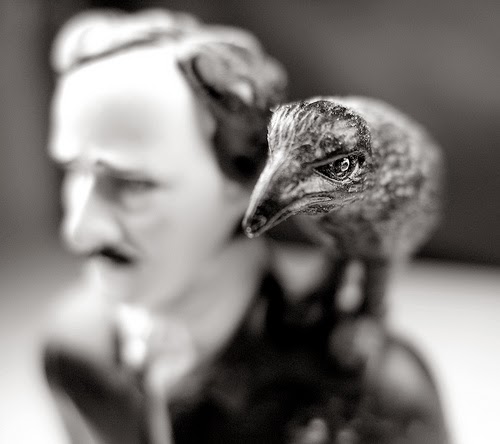
Edgar Allen Poe? Poe was an American author. Hecontributed greatly to the
genres of horror and science fiction. Poe is now considered the father of the
modern detective story and highly lauded as a poet. Poe’s
psychologically thrilling stories, examine the depths of the human psyche
earned him much fame during his lifetime and after his death. His own life was
marred by tragedy at an early age (his parents died before he was three years
old) and in his oft-quoted works we can see his darkly passionate
sensibilities—a tormented and sometimes neurotic obsession with death and
violence and overall appreciation for the beautiful yet tragic mysteries of life.
(Source: The Literature Network)
The Raven
By Edgar Allan Poe.
Once upon a midnight dreary,
while I pondered, weak and weary,
Over many a quaint and curious volume of forgotten lore -
While I nodded, nearly napping, suddenly there came a tapping,
As of some one gently rapping, rapping at my chamber door.
"'Tis some visitor," I muttered, "tapping at my chamber door -
Only this and nothing more."
pondered = thought
lore = story
rapping = knocking
muttered = said
Ah, distinctly I remember it
was in the bleak December,
And each separate dying ember wrought its ghost upon the floor.
Eagerly I wished the morrow; -vainly I had sought to borrow
From my books surcease of sorrow -sorrow for the lost Lenore -
For the rare and radiant maiden whom the angels name Lenore -
Nameless here for evermore.
bleak = sad, black and cold
ember = burning piece of wood glowing orange
wrought = presented
morrow = the next day
maiden = woman, girl
And the silken sad uncertain
rustling of each purple curtain
Thrilled me -filled me with fantastic terrors never felt before;
So that now, to still the beating of my heart, I stood repeating,
"'Tis some visitor entreating entrance at my chamber door -
Some late visitor entreating entrance at my chamber door;
This it is and nothing more.
rustling = movement that
makes noise
entreating = asking for
Presently my soul grew
stronger; hesitating then no longer,
"Sir," I said, "or Madam, truly your forgiveness I implore;
But the fact is I was napping, and so gently you came rapping,
And so faintly you came tapping, tapping at my chamber door,
That I scarce was sure I heard you" -here I opened wide the door; -
Darkness there and nothing more.
implore = ask for
scarce = hardly
Deep into that darkness
peering, long I stood there wondering, fearing,
Doubting, dreaming dreams no mortal ever dared to dream before;
But the silence was unbroken, and the stillness gave no token,
And the only word there spoken was the whispered word "Lenore!"
This I whispered, and an echo murmured back the word "Lenore" -
Merely this and nothing more.
peering = looking into
gave no token = gave no sign
Back into the chamber
turning, all my soul within me burning,
Soon again I heard a tapping something louder than before.
"Surely," said I, "surely that is something at my window
lattice;
Let me see, then, what threat is, and this mystery explore -
Let my heart be still a moment and this mystery explore; -
'Tis the wind and nothing more!"
window lattice = frame around
the window
Open here I flung a shutter,
when, with many a flirt and flutter,
In there stepped a stately Raven of the saintly days of yore.
Not the least obeisance made he; not an minute stopped or stayed he;
But, with mien of lord or lady, perched above my chamber door -
Perched upon a bust of Pallas just above my chamber door -
Perched and sat and nothing more.
flung = threw open
flutter = movement of wings, noise
stately = magnificent
obeisance = gesture of deference, respect
mien = manner of
perched = how a bird sits
Then this ebony bird
beguiling my sad fancy into smiling,
By the grave and stern decorum of the countenance it wore,
"Though thy crest be shorn and shaven, thou," I said, "art sure
no craven,
Ghastly grim and ancient Raven wandering from the Nightly shore -
Tell me what thy lordly name is on the Night's Plutonian shore!"
Quoth the Raven, "Nevermore!"
beguiling = charming
countenance = bearing, manner
crest = head
thou = old English for you
art = are
craven = cowardly, mean-spirited
thy = old English for your
Much I marvelled this
ungainly fowl to hear discourse so plainly,
Though its answer little meaning -little relevancy bore;
For we cannot help agreeing that no living human being
Ever yet was blest with seeing bird above his chamber door -
Bird or beast upon the sculptured bust above his chamber door,
With such a name as "Nevermore".
marvelled = was surprised
ungainly = ugly
fowl = bird
discourse = speech
bore = contained, had
But the Raven, sitting lonely
on the placid bust, spoke only
That one word, as if his soul in that one word he did outpour.
Nothing farther then he uttered; not a feather then he fluttered -
Till I scarcely more than muttered: "Other friends have flown before
- On the morrow he will leave me as my Hopes have flown before."
Then the bird said "Nevermore".
placid = peaceful
uttered = said
Startled at the stillness
broken by reply so aptly spoken,
"Doubtless," said I "what it utters is its only stock and store,
Caught from some unhappy master whom unmerciful Disaster
Followed fast and followed faster till his songs one burden bore -
Till the dirges of his Hope that melancholy burden bore
Of `Never -nevermore'."
aptly = well
stock and store = repeated phrase
dirges = sad songs
But the Raven still beguiling
all my sad soul into smiling,
Straight I wheeled a cushioned seat in front of bird, and bust, and door;
Then, upon the velvet sinking, I betook myself to linking
Fancy unto fancy, thinking what this ominous bird of yore -
What this grim, ungainly, ghastly, gaunt, and ominous bird of yore
Meant in croaking "Nevermore".
betook = moved myself
fancy = here used as noun meaning imagined story, thought
yore = from the past
croaking = the sound a frog makes, usually a very ugly sound coming from the
throat
This I sat engaged in
guessing, but no syllable expressing
To the fowl whose fiery eyes now burned into my bosom's core;
This and more I sat divining, with my head at ease reclining
On the cushion's velvet lining that the lamp-light gloated o'er,
But whose velvet violet lining with the lamp-light gloating o'er
She shall press, ah, nevermore!
bosom = chest, heart
divinig = guessing
Then, methought, the air grew
denser, perfumed from an unseen censer
Swung by Seraphim whose foot-falls tinkled on the tufted floor.
"Wretch," I cried "thy God hath lent thee -by these angels he
hath sent thee
Respite -respite and nepenthe from thy memories of Lenore!
Quaff, oh quaff this kind nepenthe and forget this lost Lenore!"
Quoth the Raven, "Nevermore".
methought = old English for
"I thought"
censer = a container for burning incense
wretch = horrible person
hath = old English for has
thee = old English for you
respite = rest from
nepenthe = a drug providing a way of forgetting something
quaff = drink quickly or recklessly
Quoth = quoted
"Prophet!" said I
"thing of evil! -prophet still, if bird or devil! -
Whether Tempter sent, or whether tempest tossed thee here ashore,
Desolate, yet all undaunted, on this desert land enchanted -
On this home by horror haunted, -tell me truly, I implore -
Is there -is there balm in Gilead? -tell me -tell me, I implore!"
Quoth the Raven, "Nevermore".
Tempter = Satan
tempest = storm
balm = liquid that eases pain
Gilead = biblical reference
"Be that word our sign
of parting, bird or fiend!" I shrieked, upstarting -
"Get thee back into the tempest and the Night's Plutonian shore!
Leave no black plume as a token of that lie thy soul hath spoken!
Leave my loneliness unbroken! -quit the bust above my door!
Take thy beak from out my heart, and take thy form from off my door!"
Quoth the Raven, "Nevermore".
parting = separation, leaving
fiend = monster
shrieked = shouted, screamed
plume = type of feather
quit = leave
And the Raven, never
flitting, still is sitting, still is sitting
On the pallid bust of Pallas just above my chamber door;
And his eyes have all the seeming of a demon's that is dreaming,
And the lamp-light o'er him streaming throws his shadow on the floor;
And my soul from out that shadow that is floating on the floor
Shall be lifted -nevermore.
Teacher Guide to "The Raven"
How might students use storyboards to demonstrate and to extend their learning?
Check the resources here. Includes essential questions, plot diagram, TP-CASTT
approach to writing, literary elements, key themes, symbols, and motifs,
vocabulary, post-reading project, more. Note: Storyboard That helps
sponsor this site.
Edgar Allan Poe: Nevermore
Video biography (1:05) from biography.com. This episode discusses the overnight
fame created by publication of "The Raven" and mentions that Poe
earned only $14.00 from it.
Edgar Allan Poe
Poetry Readers Theater
A fun project that serves as a good introduction to both Readers Theater and
four poems by Poe: "The Raven," "The Bells,"
"Eldorado," and "Annabel Lee."
The Interactive
Raven
As students work online through each stanza, they learn alliteration,
assonance, and internal rhyme. Vocabulary words are also indicated.
"The Raven"
Background analysis and emphasis on vocabulary.
"The Raven"
Video of actor John Astin in period costume reciting the poem.
"The Raven"
Voice Artist Bob McGraw's dramatic reading of the poem. The video features
lithographs by 19th century artist Gustav Dore. It resides at YouTube.
"The
Raven"
This YouTube video (9:56) of Christopher Walken reading the poem includes the
lithographs by Dore and the text of the poem as captions.
"The
Raven"
Actor John De Lancie reads the poem. Video runs 8:54.
"The
Raven" vocabulary
Words are presented in context and with definitions. Click on a word for
pronunciation, synonyms, examples of use, more.
"Edgar
Allen Poe" [sic]
1909 film by D. W. Griffith, the first to feature Poe as a character. The film
depicts an imaginative inspiration for writing "The Raven": Poe needs
money for his sick wife, Virginia. Students may need to be reminded that this
depiction is not historically accurate. This black-and-white "silent"
film runs 7:06; a piano soundtrack is provided.
Repeat After Us
Audio files of "Annabel Lee," "Eldorado," "Sonnet - To
Science," "The City in the Sea," "The Raven," "To
Helen." A good site for LD students, ELL students, and for those who read
well and might like to record and contribute. Files are in alphabetical order
by poet; scroll down.
For my elementary students week 8 is midterms, so we are
busy reviewing and testing. Its all serious business. Reality is scary enough. But if by chance we have
some time at the end of testing, say just 5 minutes, then I’d like them to get
them moving. I love wii Dance, kids love it too. Check out a timeless classic
made into a dance, just in time for Halloween. “Who you gonna call?
Ghostbusters!”
During their oral exam, Grasshopper class illustrated their costumes and watched The Nightmare before Christmas. I will give them a group reading and do some rhyming of Halloween vocabulary. If we have time we can play some online interactive games with the vocabulary. Here are some links: Halloween Monsters Memory Game Halloween vocabulary Memory Game Matching Quiz
For my G7B class we have been studying Genre and Fantasy as an introduction to their unit on JRR Tolkien. I am also
giving my G8A a break from their book this week. So I’ve dedicated this week to
learning Halloween vocabulary and a lesson on Stephan King.
Halloween Vocabulary List 1:
costumes, “ In Halloween kids wear costumes.” "Let’s see
some costumes."
My Junior High kids are interested in scary movies, and one way to link this to contemporary American literature is introducing them to author Stephen King. Reading any of his stories in English is beyond their level right now, but at least they can be exposed to some of his more famous works through film adaptations.
Top 10 Stephen King Adaptations:
#10. The Dead Zone
Johnny Smith wakes up from a coma with psychic powers.
#9. The Stand
This story is Stephen King’s own “Lord of the Rings.”
#8. It
About a scary clown
terrorizing a small town.
#7. The Mist
A monster movie and survivor story. A fog brings in scary
creatures that prey on town folk.
#6. Carrie
The shy Carrie is bullied at school. She realizes she has
psychic gifts.
#5. Stand By Me
A coming of age story about a group of boys traveling to see a
dead body.
#4. Misery
After crashing his car,
an author is taken care of by his biggest fan.
#3. The Green Mile
A spiritual story about a black, simple, mystical prisoner,
who is wrongly killed.
#2. The Shining
REDRUM is backwards for____________. This movie is about cabin
fever.
#1 The Shaw Shank Redemption
A convicted killer finds friendship.
In one of my Junior High classes, I want to celebrate “Vocabulary
day” based on Debra Frasier’s book, “Miss Alaineus: A Vocabulary Disaster.”
Students choose a word from our massive vocabulary list, and design a creative
interpretation of that word for their costume. I think we would only have time
to sketch a costume. When thinking of a creative costume, students must be able
to define the word in a creative manner. For example, if a student chose the
word “miscellaneous,” he can interpret this word into a costume by placing a
collection of unrelated objects onto his clothing.


.jpg)